Original: $4.79
-70%$4.79
$1.44The Story
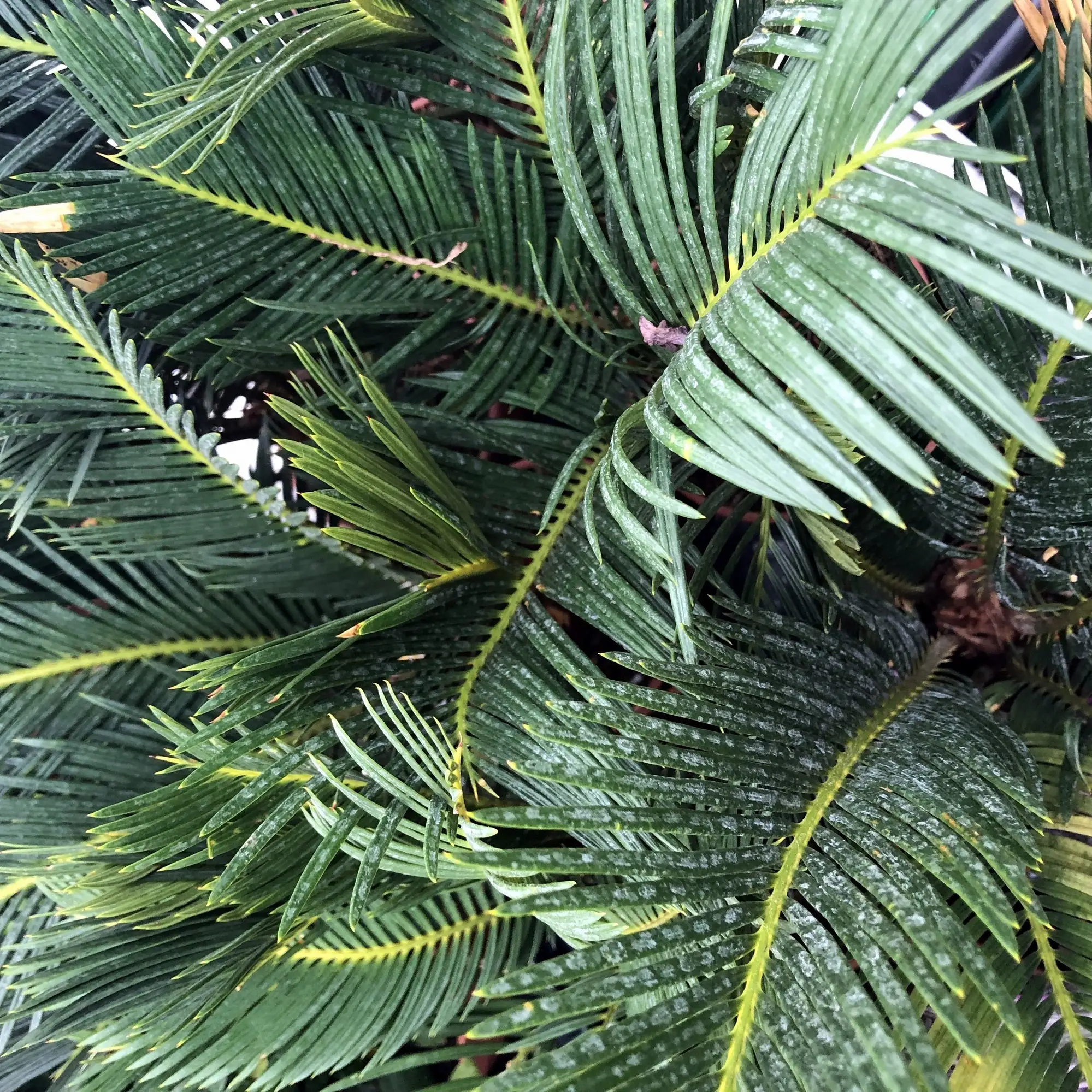
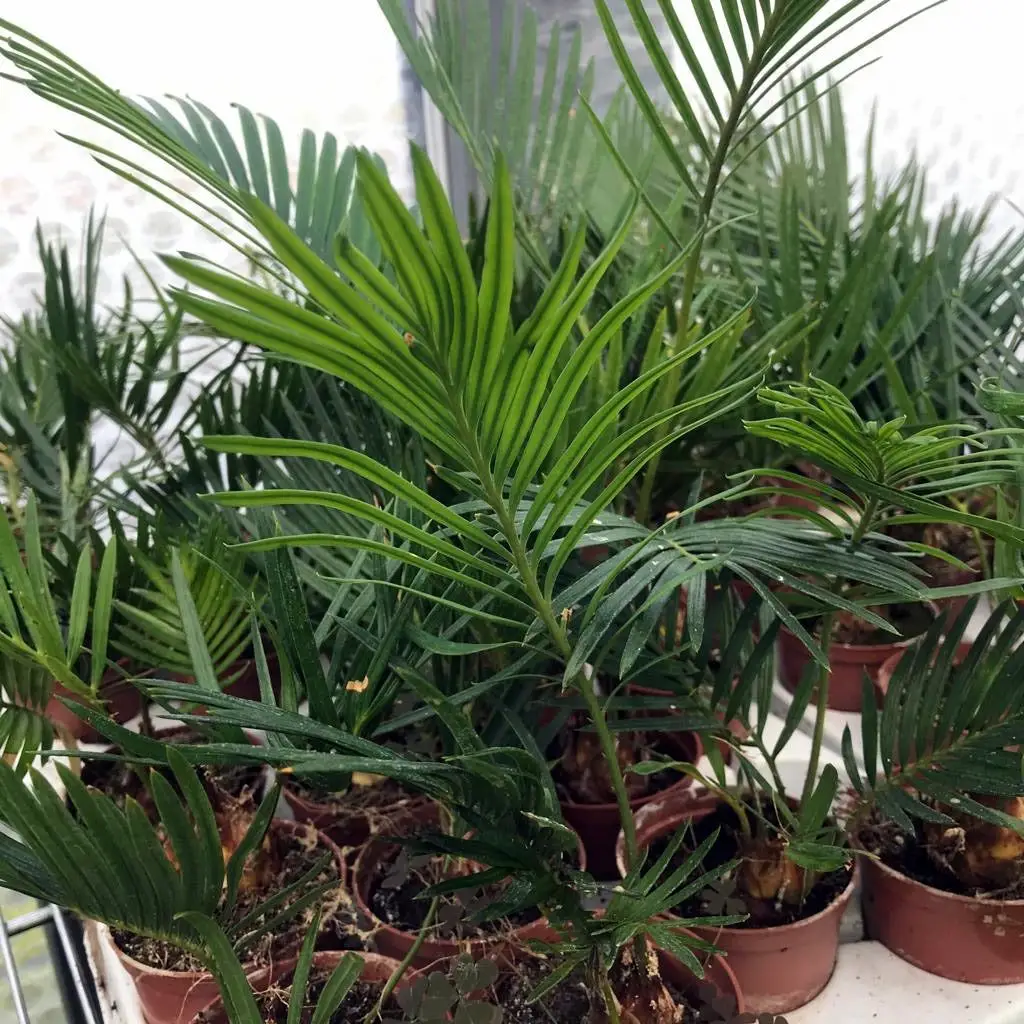
Cycas are a primitive plant that looks a little like a spikey fern. They are suitable for large arid enclosures and are ideal as they grow very slowly.
Cycas revoluta has gained popularity as a desirable addition to tropical and lush gardens. Although typically considered not completely frost-resistant, it can survive temperatures as low as minus 7 degrees if kept free from moisture and with a consistent daytime temperature above freezing. For optimal growth, a minimum temperature of 25 degrees C is recommended during the summer months. Cycads typically produce all of their leaves at once and require warm temperatures for full foliage development.
Cycas revoluta is capable of producing trunks reaching heights of 6 or more meters. Occasionally, these trunks may be branched or multi-headed. Its deep green, shiny leaves have a feather-like structure and grow in multiple rosettes, reaching up to 1.5 meters in length on mature plants. Like most Cycads, the Japanese Sago Palm thrives in sandy, well-draining soil that is enriched with organic compost. It is best positioned in an area with full sun to partial shade. A noteworthy characteristic of this palm is its complex roots, known as coralloid, which have a coral-like structure and contain a symbiotic algae. This algae provides the palm with a beneficial supply of nitrogen in exchange for a sheltered spot to live.
Details & Craftsmanship
Every detail has been carefully considered to bring you the perfect product.
Description
Cycas are a primitive plant that looks a little like a spikey fern. They are suitable for large arid enclosures and are ideal as they grow very slowly.
Cycas revoluta has gained popularity as a desirable addition to tropical and lush gardens. Although typically considered not completely frost-resistant, it can survive temperatures as low as minus 7 degrees if kept free from moisture and with a consistent daytime temperature above freezing. For optimal growth, a minimum temperature of 25 degrees C is recommended during the summer months. Cycads typically produce all of their leaves at once and require warm temperatures for full foliage development.
Cycas revoluta is capable of producing trunks reaching heights of 6 or more meters. Occasionally, these trunks may be branched or multi-headed. Its deep green, shiny leaves have a feather-like structure and grow in multiple rosettes, reaching up to 1.5 meters in length on mature plants. Like most Cycads, the Japanese Sago Palm thrives in sandy, well-draining soil that is enriched with organic compost. It is best positioned in an area with full sun to partial shade. A noteworthy characteristic of this palm is its complex roots, known as coralloid, which have a coral-like structure and contain a symbiotic algae. This algae provides the palm with a beneficial supply of nitrogen in exchange for a sheltered spot to live.